Research Question #3: How does the Higashi Honganji make Shin Buddhism more appealing in an Americanized society?
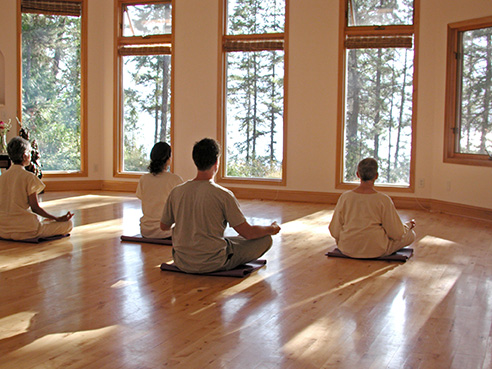
As passing generations of Japanese Americans have become more and more Americanized, branch membership at the Higashi Honganji has faced both steady and sharp decline in recent years. To combat this trend, the Higashi Honganji has adopted new services to appeal to the newest generation of Japanese Americans and their families, including several new doctrines and practices which have been frowned upon by a number of Japan’s Buddhist bishops, such as promoting meditation as a means to achieve enlightenment.
Despite this disapproval, however, the temple also recognized early on that it could not sustain membership in the long-run and survive on a solely Japanese or Japanese-American base of membership, and has since then tried to offer more services which are likely to be more appealing to Americans of all ages, genders, races, and levels of income. Examples of some services tailored to a more Westernized audience which are unique to the American branch of the Higashi Honganji are:

The Higashi Honganji is also unique in that it holds several joint events throughout the year with other Buddhist temples in and around the Los Angeles area. These other Buddhist temples do not necessarily belong to the same sect of Buddhism as the Higashi Honganji (Shin-Buddhism). Some examples include the Jodo Shu Buddhist Temple and the Soto Zen Buddhist Temple, both located nearby. These strategic alliances with other Buddhist temples have both worked in favor of and against the Higashi Honganji's goals of appealing to a wider audience.
On the one hand, expanding its network by holding joint events allows the Higashi Honganji to draw larger crowds at its meditation sessions, mindfulness workshops, and other community events. It also provides for greater awareness between practicing Buddhists, and allows the American Buddhist communities to inter-mingle and connect with one another in ways which may not have previously been possible. On the other hand, however, having close ties with other Japanese Buddhist temples might not be the best way to boost membership numbers among non-Japanese Americans. This is because this practice might give off the impression of and reinforce the idea of that the Buddhist community is one which embraces insular culture/community. This could potentially make Shin-Buddhism seem unwelcoming to foreigners or intimidating to non-Asian Americans.
Ultimately, the Higashi Honganji's efforts to make Shin Buddhism more appealing in an American society have only achieved partial success. Overall membership numbers are still not where they used to be in the 1980s and 90s, and the perception that the church is less friendly or less accepting of non-Japanese members remains dominant. The new services listed above have indeed drawn a more diverse crowd of temple-goers to the Higashi Honganji, but raw membership numbers remain unimpressive.
Despite this disapproval, however, the temple also recognized early on that it could not sustain membership in the long-run and survive on a solely Japanese or Japanese-American base of membership, and has since then tried to offer more services which are likely to be more appealing to Americans of all ages, genders, races, and levels of income. Examples of some services tailored to a more Westernized audience which are unique to the American branch of the Higashi Honganji are:
- Zumba classes
- Golf tournaments
- Yoga classes
- Group meditation sessions
- Mindfulness workshops
Other services include:
- Lumbini Child Development Center (Pre-school for Buddhist children)
- Dharma School (After-school program for pre-school to 5th-grade aged Buddhist students)
- Sangha Teens (After-school program for middle school-aged Buddhist youths)
The Higashi Honganji is also unique in that it holds several joint events throughout the year with other Buddhist temples in and around the Los Angeles area. These other Buddhist temples do not necessarily belong to the same sect of Buddhism as the Higashi Honganji (Shin-Buddhism). Some examples include the Jodo Shu Buddhist Temple and the Soto Zen Buddhist Temple, both located nearby. These strategic alliances with other Buddhist temples have both worked in favor of and against the Higashi Honganji's goals of appealing to a wider audience.
On the one hand, expanding its network by holding joint events allows the Higashi Honganji to draw larger crowds at its meditation sessions, mindfulness workshops, and other community events. It also provides for greater awareness between practicing Buddhists, and allows the American Buddhist communities to inter-mingle and connect with one another in ways which may not have previously been possible. On the other hand, however, having close ties with other Japanese Buddhist temples might not be the best way to boost membership numbers among non-Japanese Americans. This is because this practice might give off the impression of and reinforce the idea of that the Buddhist community is one which embraces insular culture/community. This could potentially make Shin-Buddhism seem unwelcoming to foreigners or intimidating to non-Asian Americans.
Ultimately, the Higashi Honganji's efforts to make Shin Buddhism more appealing in an American society have only achieved partial success. Overall membership numbers are still not where they used to be in the 1980s and 90s, and the perception that the church is less friendly or less accepting of non-Japanese members remains dominant. The new services listed above have indeed drawn a more diverse crowd of temple-goers to the Higashi Honganji, but raw membership numbers remain unimpressive.
Comments
Post a Comment