INTERNMENT
Japanese Internment happened during the second World War, where Japanese Americans were forced to leave their homes and relocate to concentration camps. There were roughly 120,000 people who were sent to such camps on the basis that they were seen as a potential danger to the country.
After reviewing and researching about internment, it was surprising to learn that Japanese Americans actually stayed positive throughout the process. They did everything possible to keep traditions alive during internment, despite the unfavorable situation.
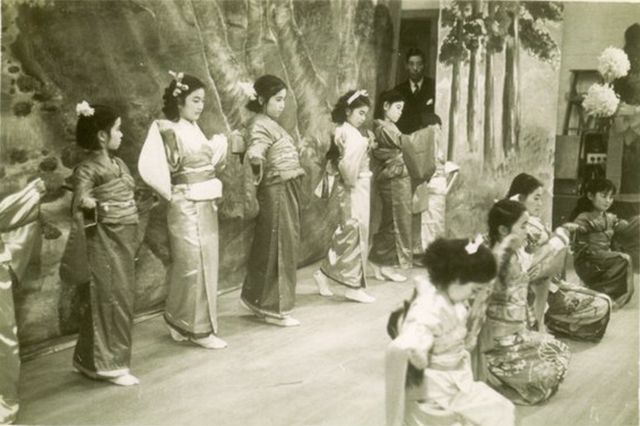
Weekly Buddhist classes were held within the camps, and people turned to various art forms in an effort to preserve traditions. Music, painting, and dance were among the most popular methods people kept in touch with their roots. There was always singing going on in the camps and traditional songs remained in the mainstream within the camps. One article described the story of a little girl who was able to bring her koto, a traditional Japanese stringed instrument (pictured below) to the camp she was moved to. She would get music lessons from her mother every day and when her koto broke or needed repair, she would scavenge the camp for spare wood to fix it. This was not uncommon in the camps, people made the most of what was available to them and never gave up.
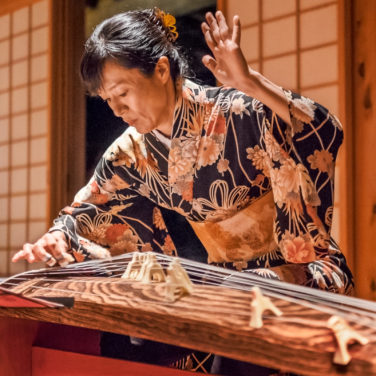 |
| A traditional koto being played |
Overall, the Japanese American Buddhists in the internment camps definitely did their best to think about everything in a positive light despite the fact that the reality was far from ideal. I think that is representative of Buddhism's First Noble Truth, where it is stated that suffering is a part of life. I think this can help explain the positive attitude Japanese Buddhists had while interned - they realized that life is going to have its ups and downs, and that there was nothing that they could do right now to fix it, so looking at it with a positive attitude was the best course of action.
 |
|
Comments
Post a Comment